Cultivating Community
How one alum’s garden project became the largest urban farm in the city
Story and photographs by Kyra Young
A
rooster’s crow cracks from the end of the cul-de-sac of Diana Street through the hum of distant traffic. The view from nearby Williams Ave is unassuming – a colorful stretch of side-by-side San Francisco homes neighbor a gaping Caltrain tunnel surrounded by a gangly, wired fence.
The sound might seem out of place in the Bayview District, but to the neighbors, it’s just another day living next to Florence Fang Community Farm.
“We’ve had chickens escape before, and people tell us ‘Oh! Your chickens got loose and we followed them. We had no idea this was here,’” says Faheem Carter, farm manager and co-founder of FFCF. “They’re always surprised to see what we have going on.”
For 10 years Carter served as the farmer-in-charge under Executive Director Ted Fang. Together they sowed seeds of education, economic opportunity and food sovereignty in one of San Francisco's most underserved communities. Today, Carter is the farm’s primary caretaker.
A 33 year-old Black man, he was born and raised in the Bayview District only a short distance from what is now the community farm. The plot used to be a barren brownfield that functioned as a catch-all for the neighborhood’s trash. Never could Carter have imagined it would become the bountiful farm he would tend as if it were his own.
After graduating high school, Carter began growing vegetables in his backyard, wanting to find ways to support his own health and weight struggles. He could not help but notice the lack of healthy, culturally relevant food options available around him. A number of health issues were also prevalent in his family, such as high blood pressure and cancer.
“I was wondering to myself how I can eat better and exercise more when everything around me is a bag of chips, burgers, fast food,” Carter says. “Trying to get the healthy, organic stuff is really pricey and just out of the way. It’s not in my neighborhood and then the commute costs to get there and back … It adds up. It wasn’t sustainable.”
The U.S. Department of Agriculture has classified the Bayview and Hunters Point neighborhoods as “food deserts,” areas where residents’ access to a variety of nutritious, affordable food is limited or nonexistent. Food deserts correlate with “food insecurity,” defined by the USDA as times during the year where a household is uncertain of having, or unable to acquire, enough food to meet the needs of all their members due to insufficient funds or other resources.
The Bayview-Hunters Point communities were found to have some of the highest rates of food insecurity in the city, as cited in the 2023 Biennial Food Security and Equity Report. Residents of the 94124 zip code are also disproportionately affected by chronic health conditions such as hypertension and heart disease, as reported in the 2025 Recommendation Report by the Food Security Task Force.
Carter knows the term “food desert” fails to appropriately describe the challenges faced in his neighborhood. “I didn’t see how the term was applicable to this community. “A desert is natural, whereas having a lack of food in a community is structured. It’s manmade,” Carter says.
Having taken matters into his own hands, Carter’s family soon found themselves eating fresh tomatoes, lettuce, carrots and strawberries straight from their own backyard. He continued to pass out the surplus to his neighbors, who began asking for guidance on starting gardens of their own. It wasn’t long before Carter found himself tending to three backyards. All the while, he envisioned something larger that could better meet the needs of the community.
The desire for food sovereignty — reclaiming a community’s right to healthy and culturally appropriate food produced through ecologically sound and sustainable methods — became a driving force for Carter’s vision of a community garden in the Bayview. He enrolled in City College’s Horticultural Program and began looking for vacant plots in his neighborhood. He contacted the city to inquire about every unproductive property he stumbled across, but nothing panned out.
Meanwhile, Ted Fang, a community organizer and to-be executive director of FFCF, was working to create a garden for the Bayview’s Asian community and address the lack of Asian produce markets in the neighborhood. He conducted multiple public meetings to discuss the garden’s vision and after extensive outreach, former Bayview-Hunters Point Supervisor Malia Cohen located an available one-acre plot atop a Caltrain tunnel. The journey had just begun when Fang met Carter.
“People were telling me there was a young gentleman in the neighborhood who wants to do this kind of work, so I got connected with Faheem,” Fang said in an interview with students from Lick-Wilmerding High School in 2022. Touched by Carter’s vision and perseverance to fight for his neighborhood’s health, Fang quickly recruited him for the project.
“I said to him, ‘We have a long way to go. If you hang in here with us and help us clean this land together, you’ll have that plot.’ And now of course, Faheem doesn’t just have a plot; he has a whole farm,” Fang said.
Fang secured a long-term lease for the site with Caltrain in 2014. Over the next two years, Fang, Carter and a committed team of Bayview residents cleaned and prepared the plot. The farm broke ground as the Florence Fang Community Asian Garden on April 17, 2014, named after Fang’s mother and in an ode to traditional Asian gardening culture.
In the years that followed, the mission expanded to celebrate the ethnic diversity that defines the Bayview-Hunters Point. On Sept. 25, 2020, the farm was rebranded more inclusively as Florence Fang Community Farm.
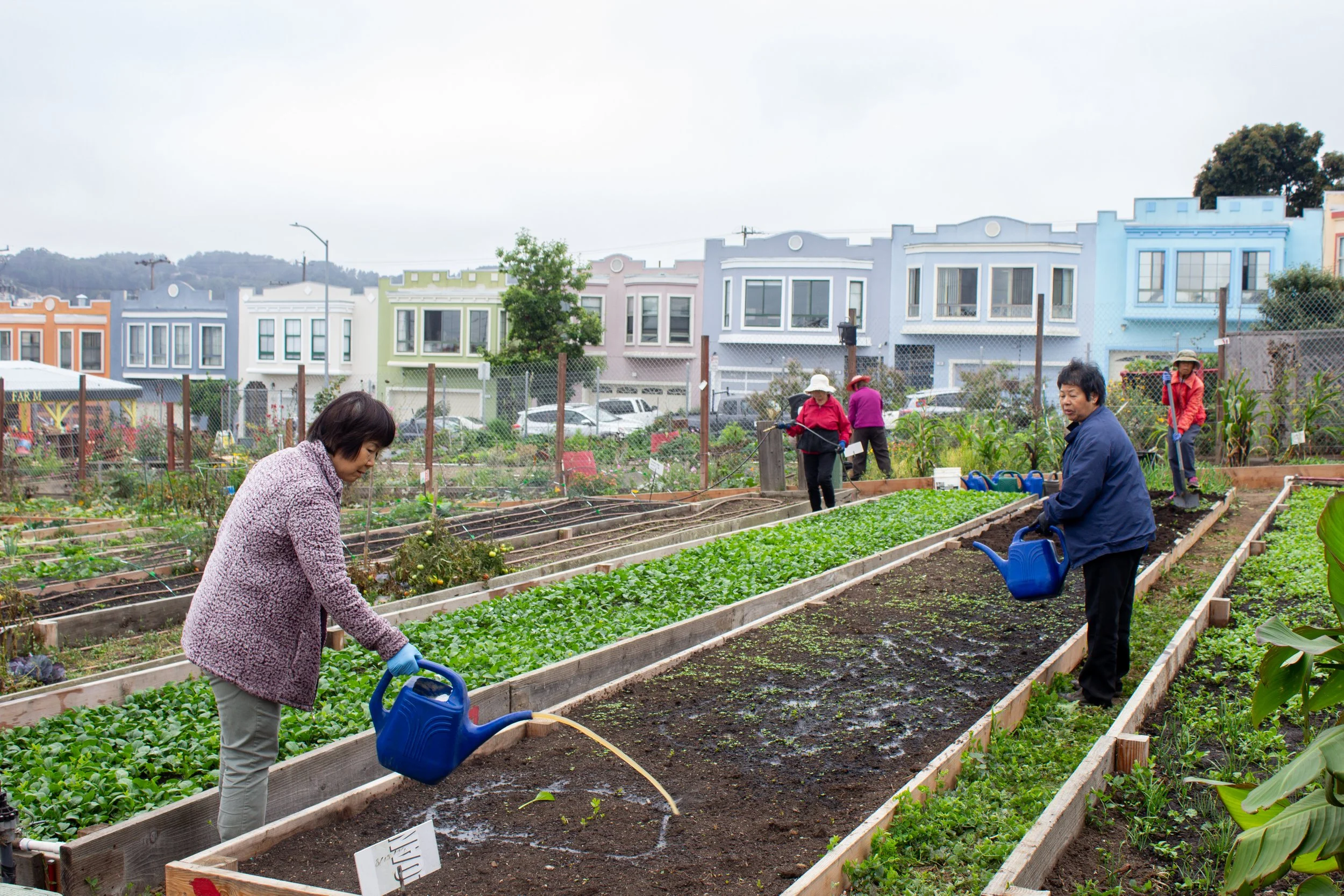
Measuring about an acre, the farm harvests more than 10,000 lb. of produce a year, making it San Francisco’s largest farm and the second-most productive in the city. On Saturdays, people come from across the city to volunteer their time and take fresh produce home after the harvest. The farm also hosts a food pantry with SF Marin Food Bank on Saturday mornings, serving over 300 individuals every week.
In an effort to increase diversity at the farm and broaden its reach, Carter and Fang partnered with Family and Child Empowerment Services SF in 2020 to provide year-round, after-school programs at the farm. This collaboration engages some of the city’s most disadvantaged children and families with STEM education — science, technology, engineering and math — and hands-on learning outdoors.
When the pandemic shut the nation down, the farm provided a safe, outdoor space to socialize. “A lot of people of different ages were saying, ‘It was just me in my apartment for so long, and now I’m talking and outdoors working with people,’” says Carter. “We took the opportunity to reach out and get more people involved.”
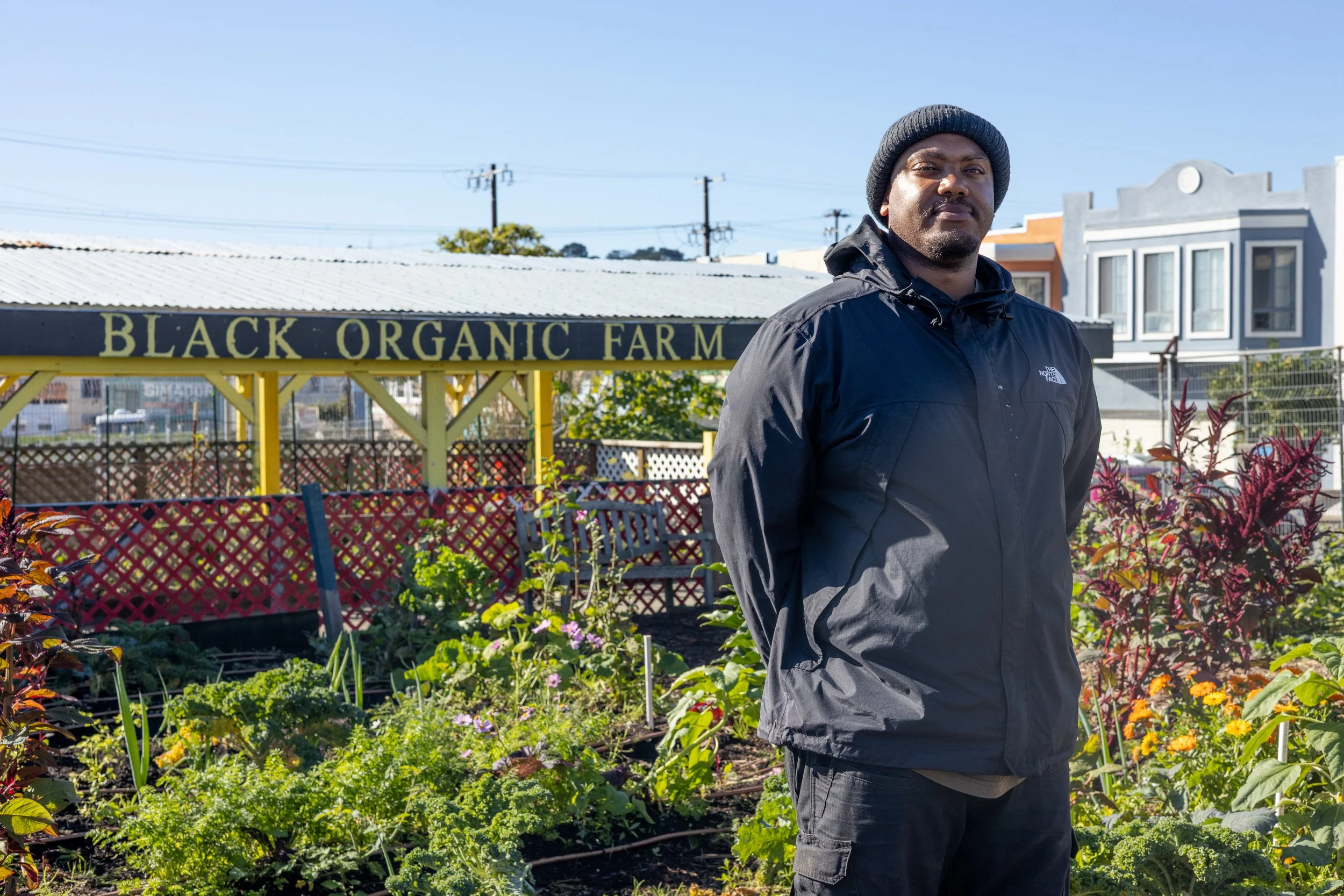
Both as a response to the Black Lives Matter movement and an attempt to diversify the hands at FFCF, Carter also spearheaded the Bayview Black Organic Farmers Program, BBOFP in 2020. This educational initiative provides people with plots and gardening tools to help them grow their own organic produce at FFCF. It also aims to support and heal the Black community’s relationship with food and land, aligning it with the farm’s mission to provide food sovereignty for residents of the Bayview-Hunters Point.
“We wanted to provide a bright spot in the community in response to all the tension going on around the nation. Get more of the Black community involved in something positive, healthy and different,” Carter says. “The Black Organic Farmers Program is a way to get more people to say, ‘I am welcome there.’”
As the farm prospered over the next decade, Carter expanded the farm’s role in the Bayview-Hunters Point. He fostered relationships in the districts to supply freshly grown produce to corner stores and local restaurants. The farm even partnered with Flour + Water, a local fine dining restaurant. Together with the BBOFP, they annually create limited-time dishes with in-season produce. In return, 100% of the profits from the dishes directly support the BBOFP.
FFCF gained greater recognition in August 2021 when the USDA recognized the farm as a model for national efforts in creating food sustainability.
More recently, the farm utilized city funding to create an apprentice program–a paid, 400 hour opportunity at FFCF. Apprentices help with maintenance and planting projects, engage with the community and coordinate with service groups and youth programs.